












Grand View University’s (GVU) Game Design Capstone gives students a chance to experience what game development looks like beyond simply playing video games. The Game Design Capstone is essentially a senior project where students of the game design major, are tasked to create their own game. For game design major Jeriana Lipinski, the course serves as a yearlong mock studio where students collaborate using their various skillsets to create a unique game from the ground up.
Lipinski’s path to game design began in a small town in Illinois where she grew up feeling isolated. With a graduating class of about 50 students, she spent most of her free time online and gradually developed a deep passion for video games.
“I found myself spending a lot of time online and I eventually found video games,” Lipinski said.
When she began searching for colleges she wanted a program that supported her interests, including dance and game design, both of which GVU had offered.
“I was trying to find somewhere I could dance because I was a dancer in high school, then somewhere I could get a game design degree and Grand View popped up,” Lipinski said.
In the Capstone students simulate how professional studios operate by dividing labor across various game design disciplines like programming, audio, art and narrative. Lipinski explained that modern game development requires many different jobs working together and that the Capstone is designed to mimic that reality. Students do not just complete individual or isolated tasks instead, they coordinate as a team building a larger project.
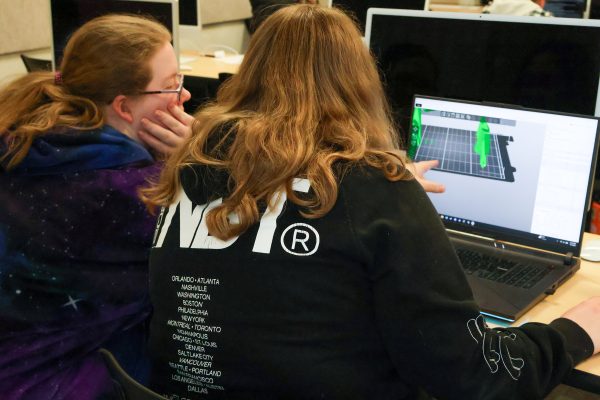
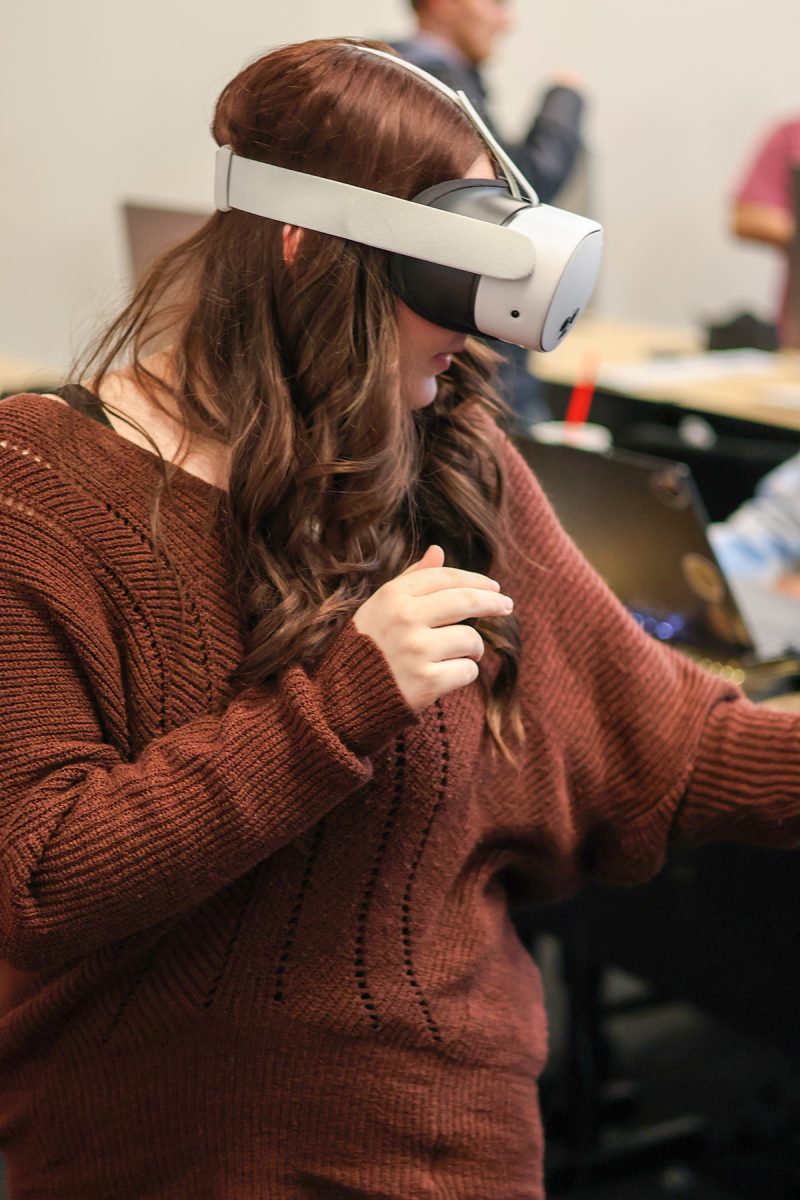
The production team uses game design tools similar to what might be used in a professional game studio. Lipinski said the team builds the game in Unity, a program used for designing games, and then they use C# (sharp) as the coding language. To keep the project accessible across the group, they use apps like GitHub so everyone can work from the same shared game build. For narrative implementation, Lipinski also uses Ink, a writing tool that integrates directly into their game engine.
“You can pretty much write it and just put it into Unity, and Unity will recognize it as code,” Lipinski said.
Rather than following a professor designed checklist, the class runs on sprints and scrum style meetings set by students. Lipinski said the team uses two week sprints with goals determined within their group internally. For example, class time often begins with a short meeting where team leads share progress updates and identify obstacles in the development process.
“It’s very much more like a work environment than it is a class environment,” Lipinski said.
The freedom of primarily student planned timelines, creates potential challenges, especially with self management. Lipinski said one of the hardest parts is assigning deadlines without relying on faculty to enforce them.
“We do have to structure everything ourselves,” Lipinski said. “If I fall behind it’s going to affect the other teams.”
Lipinski believes the Capstone’s biggest value is how closely it mirrors real world studio collaboration.
“Having to learn how to collaborate with other people, how to communicate with everyone to make your own assignments theoretically on your own due dates,” Lipinski said.
This is an experience students can carry directly into industry roles. She also emphasized the culture of support that formed as teams leaned on one another for help within tools and workflow.
“Everyone being so willing to help I think has really made this Capstone really good for us,” Lipinski said.
According to Matthew Slaymaker, a professor at GVU, the Capstone is intentionally structured to provide students with a professional experience over the course of two semesters. He explained that students take the course their senior year, with the first part kicking off in the fall and the second in the spring.
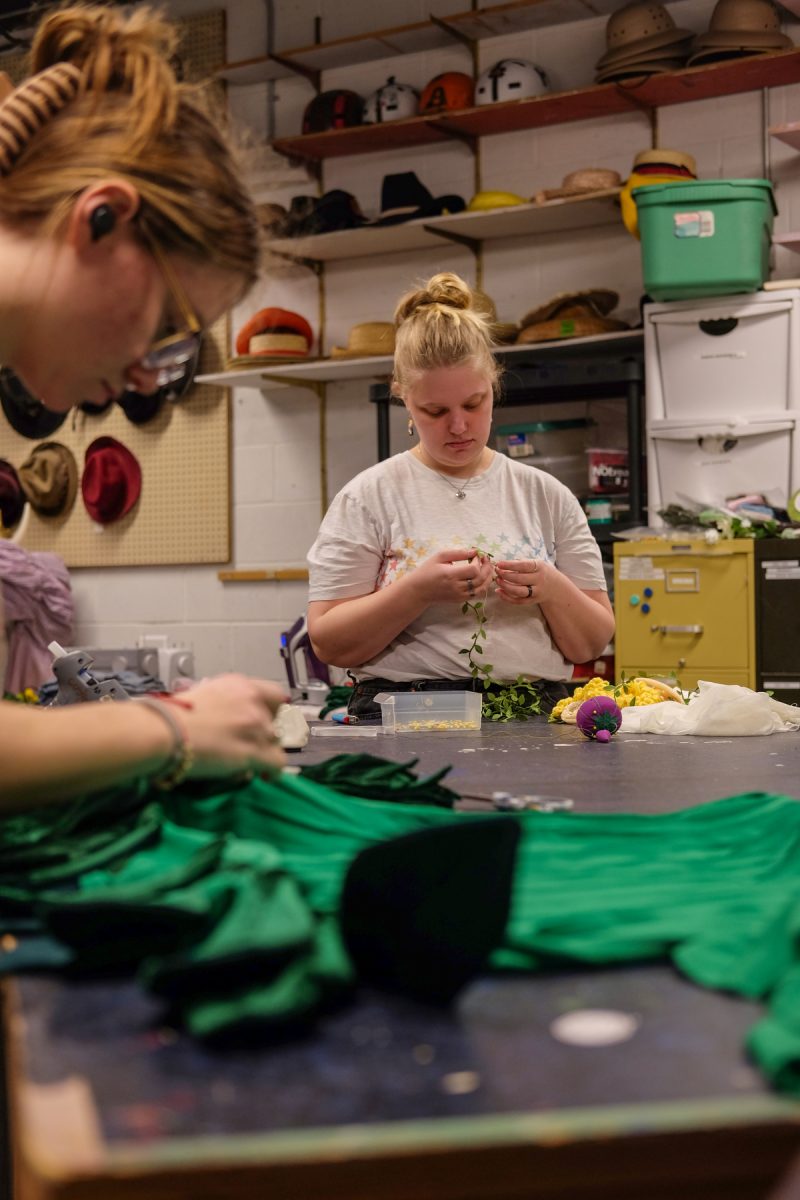
Slaymaker said the course begins with every student pitching a game idea to the entire Capstone team. After hearing the proposals, students vote on which concept the class will develop for the year. This year the winning pitch was a narrative mystery game called, “The Society of Midnight” Slaymaker described the game as “a narrative adventure game where you’re trying to solve a murder mystery at a costume masquerade.”
Once the pitch is selected, students split into teams and begin building the game through their own specialized roles. Slaymaker said that the main groups include narrative, art, music (audio) and programming. Each team has a lead, while some students serve on multiple teams at once depending on their strengths and interests.
That studio model also introduces an important lesson about buy in. Slaymaker mentioned that one early concern that tends to pop up is whether students will feel invested if their own game pitch is not chosen.
“That’s part of what we want to teach through the class,” Slaymaker said. “When you’re working, you’re not necessarily just working on a project that is solely created by yourself.”
In other words, students are learning how to contribute to a creative vision that may not have originated with them, a reality that tends to mirror how a professional studio works in regards to theming. Slaymaker also provided more detail on the workflow that supports the Capstone.
“We utilize something called Scrum, which is based on Agile workflow,” Slaymaker said.
To further explain Scrum, the class works in two week sprint cycles; meaning students build, present and revise the game in short development windows.
“Every two weeks, we basically have a deliverable where we have a new demo that we present,” Slaymaker said.
The Scrum process allows the class to test progress, gather feedback and keep improving the game through the year. The only downside to Scrum is that, even with strong planning, game development always requires compromise. As the project continued, students had to reduce the game’s scope in order to make it realistically meet the Capstone’s deadline. For instance, one major change was cutting the story from 13 nights to seven. Another was dropping the idea of recorded dialogue.
“Our goal as professors, if you tell them going in, is to hopefully finish the game, but realistically, our goal was to create what’s called a vertical slice,” Slaymaker said.
Slaymaker added that a vertical slice is a fully playable portion of a game that represents the larger project, even if every planned feature is not entirely complete. For Slaymaker, the Capstone matters not just because students make a game, but because they leave with stronger portfolios and a better understanding of professional expectations.
“We want to simulate basically a mini game studio,” Slaymaker said.
He added that the class gives students time to invest in work they are actually proud to show employers. Rather than finishing an assignment and moving on, students refine their contributions over months of collaboration and iteration.
Even when separated into different perspectives, Lipinski and Slaymaker describe a Capstone that is both creative and practical. Students write stories, build systems, make art and solve problems together as a team. It also teaches students how to manage deadlines, accept feedback when given and contribute to a team vision for a satisfying end product. For aspiring game designers at GVU, the Capstone is not just a final class. The Capstone is a bridge between college coursework and the realities of studio development.