

















The 2026 soccer World Cup is expected to be the biggest ever: three countries, 16 cities, more than 5 million fans expected and, for the first time, 48 teams instead of the usual 32. This World Cup will be innovatively hosted in the US, Canada and Mexico, stretching across the entire North American continent, with distances between the cities involved exceeding 3,000 miles, such as Vancouver and Mexico City. Are these countries ready to host the biggest sporting event in the world?
Many people are skeptical. Critics point to the public transport system, the long distances involved, the habitual sensationalism surrounding sport in North America, ticket prices and the travel bans that came into effect on Jan. 1, 2026. As excitement builds, questions remain; can a continent built on distance, profit and politics truly deliver the passion that historically defines a World Cup?
One of the main criticisms often leveled at North Americans when it comes to soccer is that they do not have as strong a soccer culture as other European or South American countries, and for this reason, they are not worthy of hosting the World Cup. According to Fox Sports, a 2026 survey showed that soccer only has a 10% of fans in the US, compared to American football, which has 36%, and basketball, which has 17%. This makes it clear that soccer remains a secondary sport in the U.S. compared to American football and basketball. However, Lucas Newhard, originally from Ankeny, Iowa, and a soccer player since childhood, disagrees with those who accuse Americans of this lack of love for soccer.
 “I wouldn’t say we lack [soccer culture], I would say we are more of a step behind. […] We are developing, we are getting there, but I think we will always be a step back,” Newhard said. Soccer has been developing in the United States, especially with players like Lionel Messi, Rodrigo de Paul, and Son Heung-min joining Major League Soccer (MLS). For Newhard, the 2026 World Cup represents an exciting opportunity to accelerate this growth.
On the other hand, Luis Helm, born and raised in Munich, Germany, one of the countries in the world with the most traditional and defined soccer culture, despite not considering the American continent unworthy, is afraid that the excitement that usually surrounds this soccer event may fade away for various reasons. He worries that the growth of soccer in the US in recent years may not be enough.
“If I look at myself growing up when the World Cup was in Germany, South Africa, Brazil, the images that come to my mind instantly when I think about those World Cups are of fans that lived for the sport, and those people live in countries like that, but not in the United States. So, it is definitely a worry that it might not create those impactful moments that you are used to seeing in a World Cup,” Helm said.
Despite this concern, Helm’s love for soccer and his desire to see it continue to grow in the country where he currently plays the sport outweigh his skepticism.
“I think it is a tool that can grow the sport even more globally and especially in markets like the US, which is not that big. It is a tool to make it hopefully more popular in the United States. That would be great. I don’t know if it’s going to happen, but if it does, it would be great,” Helm said.
The 2026 World Cup being held in three different countries looks like it is just the beginning of a trend. In fact, the 2030 World Cup will be even more extreme, involving six countries and three different continents: Morocco, Spain, Portugal, Argentina, Uruguay, and Paraguay. Although some people find this diversity exciting and look forward to this global event with curiosity, there has certainly been no shortage of criticism. A competition held in this way has many limitations in terms of organization, transportation and prices, making the event accessible only to an “elite.” For example, for Helm, ticket prices were definitely a factor that caused him to lose interest in the event.
“To be honest, my interest in the World Cup, or at least attending events at the World Cup is very, very low, because of definitely the prices, but also that it’s just in the most random places, so far apart. I think the mixture of teams playing in so many different areas and the high prices contribute to lowering my excitement towards it,” Helm said.
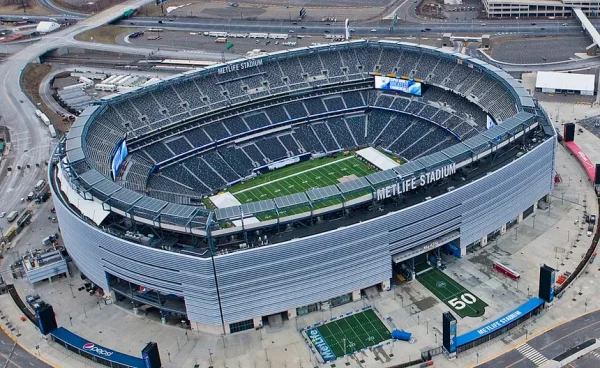
Right now, tickets for the final, which will be held in New Jersey on July 19, 2026, are starting at $5,865, with a peak of $191,000 in some VIP sections, making it accessible to just a few lucky people.
During the group stage, however, in less popular games, it was possible to purchase tickets at a lower price. Newhard is planning on attending Curaçao vs Ecuador in Kansas City. Ultimately, the success of 2026 will depend on fans’ ability to navigate costs and distances to be there. One example is Newhard, who chose to ignore the prohibitive prices of large stadiums to focus on smaller matches, confirming his desire to see this sport finally take root in his country, one game at a time.
The price of tickets is not the only factor that makes this World Cup seem inaccessible to some. As of Jan. 1, 2026, the implementation of new travel bans has made entry into the United States significantly more difficult, and in some cases nearly impossible, for fans from affected nations. A statement from president Donald Trump says that he has the authority “to suspend the entry of all aliens or any class of aliens” whenever the President “finds that the entry of any aliens or of any class of aliens into the United States would be detrimental to the interests of the United States.”
There are 39 countries involved in the ban, of which 19 are under full suspension (neither immigrants nor non-immigrants can enter) and 20 are under partial suspension (immigrants cannot enter and non-immigrants are limited to certain specific categories). Among these countries are Iran and Haiti, with full suspensions, and Senegal and Ivory Coast, with partial suspensions. While an exception will most likely be made for players, fans from these countries will be unable to travel to support their national teams, even if they want to.
All of these factors risk shifting the focus from the game itself to political tensions and economic and geographical issues. Helm is keen to point out that at the end of the game, it should not be about politics, it should be about passion and community.
“The best way to describe how people in Germany feel about their soccer teams, is how people in the US feel about the universities they attended and the football games about that university that they religiously attend,” Helm said. “It’s a cultural thing and I think it is impossible for people from the US to grasp the whole impact soccer teams have on people, in Germany and how the whole sport is rooted in the culture and community.”
Whether North America is ready or worthy of hosting the world’s biggest sporting event remains debatable. But this World Cup in the US should not be seen as a point of arrival but as a starting point for a sport that continues to grow steadily in the country.