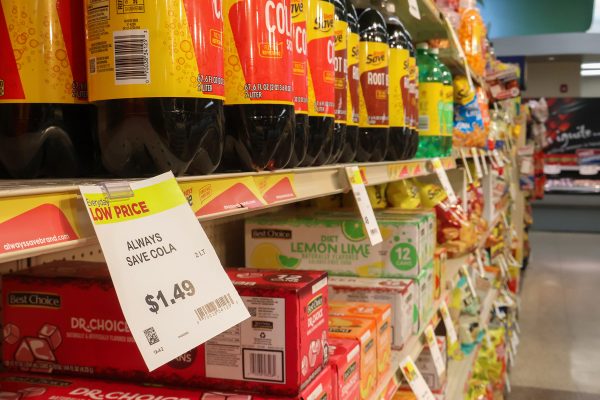
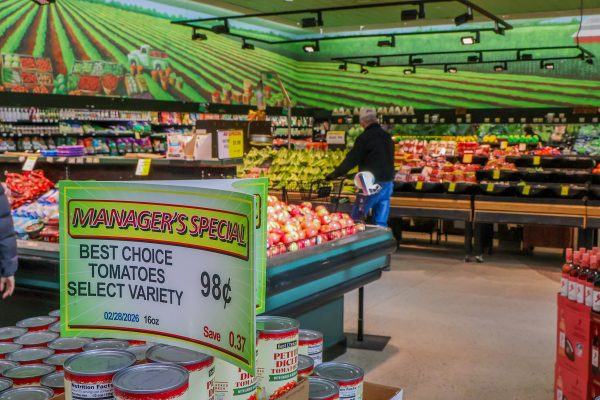
As grocery prices continue to increase across the United States, college students are feeling the pressure in a personal way. For many students already balancing tuition, housing costs, textbooks and other necessities, inflation at the grocery store has pivoted. What was once a routine errand has changed into a source of stress and difficult decision making process. Rising food costs are not only changing how students shop, but also how they budget, plan meals and how much they rely on campus provided resources, such as food pantries, to meet basic needs.
Recent inflation trends have driven up the cost of basic grocery items such as bread, milk, eggs and produce. While inflation affects nearly everyone, college students are specifically vulnerable because many live on fixed or limited incomes. Some rely on part time jobs, student loans or financial aid refunds that are often stretched before the semester even ends. As grocery bills rise, students are forced to budget or make tradeoffs between food and other necessities.
Mia Allmon, a graduate student at Grand View University, has experienced first-hand how inflation has changed her grocery shopping habits. Like many students, Allmon has had to become more conscious of prices and where her food comes from. She explained that grocery inflation has made it difficult to afford the same items she once purchased regularly, leading her to rely more heavily on government assistance programs such as the Supplemental Nutrition Assistance Program, commonly known as food stamps.
“I get food stamps once a month, and the amount that I get kind of varies month to month. Prior to getting benefits it was pretty difficult to budget for groceries especially having a work study job. Theres not much money made to balance tuition, gas, groceries, and all of that,” Allmon said.
Food stamp benefits have become a crucial budgeting system for students like Allmon, providing access to food when wages are not enough during the current state of inflation. The process of applying for government food benefits is fairly straightforward, allowing eligible college students to access assistance and receive support.
“It was pretty easy, I just had to get confirmation of my work study through the admissions and then any other source of income that I get, I just have to get documentation of that to send them as well. But overall, the process took about an hour,” Allmon said.
Without food stamps and the support of government benefits, it can be really challenging. Allmon talks about her experience with inflation before applying for food stamps.
“I did have to sacrifice a lot of different things. But now it’s a lot easier because I don’t have to worry much about paying for groceries,” Allmon said.
Beyond individual budgeting challenges, not everyone is eligible for food stamps. Universities have implemented food pantries on campus to offer free food to students who are struggling with the inflation of grocery prices. They often stock items such as canned goods, pasta, rice, along with hygiene products and when possible fresh produce like eggs and meat.
Dylan Smidt, a graduate assistant for student involvement who took over running the food pantry on campus at GVU emphasizes that the food pantry is not only a place to access food, but also a tool for budgeting.
“I graduated from a different school, it was another school where it was primarily athletes, but we didn’t have a food pantry. Everyone would go to the grocery store in town and try to be frugal or a lot of people would go to McDonalds late at night. So, I really appreciate that Grand View offers this and that donors support it because not every school has this,” Smidt said.
The food pantry often gets looked down upon by students with many misconceptions, however it is a support tool used by many to help them through the struggle of rising grocery prices.
“People might have assumptions about socio-economic status or how many people come in or what kind of volume comes into the food pantry but it’s really everyone, every team, graduate students, undergraduate students, staff and community members,” Smidt said.
The food pantry is a safe place where anyone can come in and find support through the inflation of grocery prices.
“Everyone is welcomed. There really shouldn’t be any downside to coming in, your privacy will be protected and everything. If you come in you can gather a lot of food at once without going to the store and save yourself time and money. We don’t have just food we also have toiletries and deodorant,” Smidt said.
“You’re welcome to come in as often as you want or bring your friend, tell a friend and take advantage of this opportunity while were here.”
Ultimately, the issue of grocery inflation raises important questions about affordability and the responsibility of institutions to support students’ basic needs. As colleges continue to adapt, stories like those of Mia Allmon and Dylan Smidt reveal both the challenges students face and the community-based solutions that can help resolve this issue.