












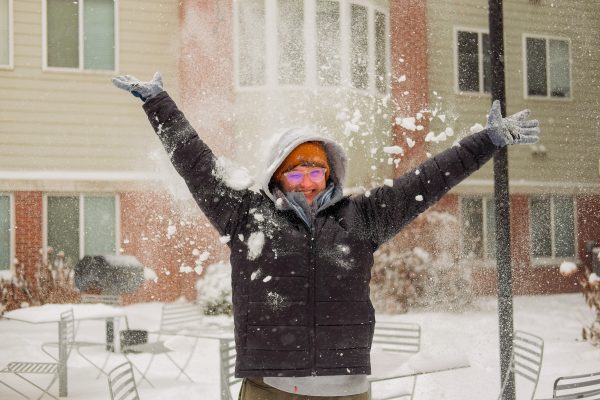
10 years ago when we were younger, we can remember snow falling earlier in the year, coming in greater amounts, and sticking around for longer. Nowadays, especially with the lackluster snowfall last year in 2024, it feels like we barely get any. Is it actually true that we’re getting less snowfall now than we were a decade ago, or is this just a misconception?
Kylie Arai
Climate change is the long-term change in Earth’s climate, including rising temperatures leading to a warmer atmosphere. It can be a difficult topic to grasp due to its slow speed and large scale. Temperatures rising by a few degrees and oceans rising by a few inches over the course of multiple decades may not feel like a massive issue, especially to Iowans who experience a wide range of temperatures and do not live near a coast. On especially cold or hot days you may hear someone make an offhand joke about how climate change is going to kill us all, but other than that the effects can be difficult for the average person to feel here in the Des Moines area.
“Sometimes you’ll hear people say, ‘Why don’t you talk about climate on TV?’ Well, I have two minutes and 45 seconds to talk about the seven-day forecast. I don’t have time, I just don’t,” Jason Parkin said, a meteorologist for WHO13 in Des Moines. “What I’ve found is that people want to know what to wear the next few days and if their lives are going to be affected in travel.”
Despite this, there are still effects of climate change where we may be able to observe a measurable local impact. One of these effects is the amount of snowfall we get in the winter.
“If you look at the last 15 years, we’ve seen a decrease by about two inches of snowfall for the city,” said Justin Glisan, the Chief State Climatologist for Iowa. “Over the last 10 years, a more substantial dip by about five inches below average. So at least in the near term, the last decade, we have seen less snow in the winter.”
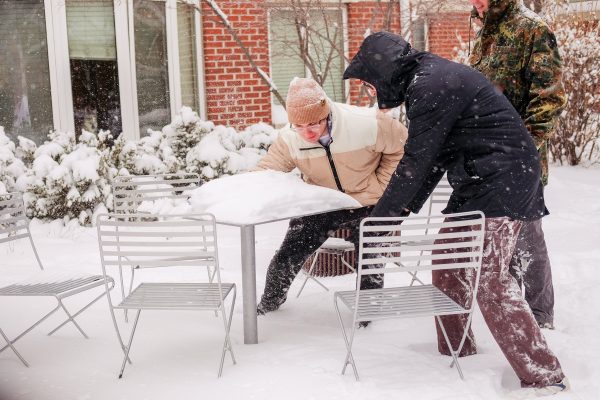
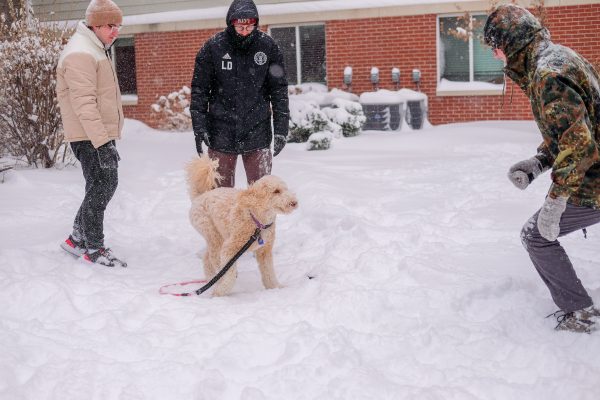
Not only are we getting less snow overall, but the period of time when snow falls is also shrinking. This means less time to go sledding, build snowmen and have snowball fights. Perhaps most importantly for some, it also means there is a lower chance of having snow on the ground on December 25, for a “white Christmas.”
“When thinking about white Christmases, at least an inch of snow on the ground on the 25th is what we consider a white Christmas meteorologically. That probability has dropped about 5-10% over the last 30 years depending on where you are in the state,” Glisan said.
These changes in snowfall may not seem like a big deal, but it is just one example of the many effects of climate change. According to Glisan, this warmer atmosphere has not only increased the growing season and quashed the amount of snow we are seeing in Des Moines, but has also led to a higher amount of severe weather events such as the derecho in 2021.
Kylie Arai
“When you’re increasing the temperature, you’re transitioning from the snowfall that we’ve historically seen to more rainfall and mixed precipitation events. So freezing rain, sleet, things of that nature, and also severe weather,” Glisan said. “December 15th 2021, 63 tornados in Iowa and serial derecho. December 15th was the warmest day on record in December for Iowa, 75 degrees.”
Of course, many complex factors besides just climate change determine the amount of snowfall we get in a year. Another factor is the natural cycle of El Niño and La Niña in the Pacific Ocean. According to the National Oceanic and Atmospheric Administration (and heavily simplified), during the El Niño phase of the cycle winds along the equator weaken, causing a sort of “warming period” for eastern sea surface temperatures. The La Niña phase is the opposite, with stronger winds along the equator causing a “cooling period.”
What does this mean for snowfall in Iowa? According to Glisan, the cycle of El Niño and La Niña correlate with the amount of snow we get in winter. Last winter in 2024 was a super El Niño, which was likely a factor in last year’s winter having the fourth least amount of snow on the ground on record. This cycle can also help us predict how much snowfall we may get this upcoming winter.
“We’re in a weak La Niña, and that is colder sea surface temperatures in the eastern equatorial pacific… If this La Niña holds true, we should see more snow across the state,” Glisan said.
Even in Iowa, we can observe warmer temperatures, less snowfall and more severe weather events happening in the last 15 years.
California coasts are not the only place where climate change is an observable phenomenon. Next time you consider whether there was more snow when you were younger, try and also consider the effects that caused that to happen. Maybe someday on TV we can have more discussion about climate change here in Iowa, alongside the seven-day forecast.
Kylie Arai