

















On June 15, 1869, Arabella Mansfield, originally from Mount Pleasant, Iowa, became the first woman in the United States to be admitted to the bar. After graduating from Iowa Wesleyan University as valedictorian and teaching briefly at Simpson College, she apprenticed at her brother’s law firm while, convinced by her husband John Mansfield, she studied law and prepared for the bar exam in 1869.
At that time, official state legislation only allowed “white men of good moral character.” However, Judge Francis Springer, an advocate of women’s rights, found a loophole in these words of the Iowa Code: “Words importing the masculine gender only may be extended to females.” This allowed Mansfield to take and pass the exam. Mansfield opened a door to the future at a time when women did not even have the right to vote in the United States.
More than 150 years later, women now dominate law school classrooms. According to an analysis conducted by the American Bar Association (ABA) in 2024, in 2016 women became the majority of law school students (56.2%). In addition, in 2020 the majority of the lawyers in the federal government were women (51.5%). However, men still hold high positions in the legal profession, and the majority of people currently practicing law are men.
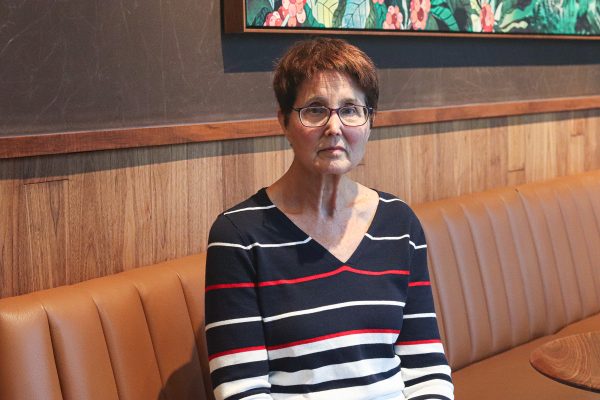
Andrea Charlow, Professor Emeritus at Drake University Law School since 1982, is a living bridge between the breakthroughs of the past and the reality of the present. Charlow entered the legal world in 1975 when the door opened by Mansfield was only slightly ajar. “There weren’t many women in law school at that point. When I got out, I got a job in a big firm. They wanted me to take over the domestic relations of juvenile law because, you know, a woman.” She recalls, “I was the only woman attorney in the firm. In the entire county [Onondaga County, NY] there were four or five of us.
However, Charlow recounted how, in her many years of teaching, she has witnessed this transition firsthand. In particular, she recounted how the situation is changing in her first workplace at a law firm.
“The firm that I was in, the woman who joined after me, she is still there, she is a partner. That firm has actually turned, I was shocked. Charlow said. “I looked it up and there were a lot of women there now, so that was something. But if you actually look at the statistics, the women are not partners. Because when a woman is a lawyer of these big firms, they expect a ton of time out of you. If you dare to get pregnant and have a kid, you need time off, you are in trouble.”
The analysis conducted by ABA proves Charlow right. In January 2024, women became a majority of law firm associates (50.3%), however, among law firm partners, only 28% were women. This means that although women are present, this shift at the entry-level does not translate into leadership. The disparity highlights how the structure of legal careers still often favors those who can commit to long, uninterrupted hours, following a model historically designed for men without caretaking responsibilities, creating barriers for many women even today.
Although the numbers show progress in the presence of women in classrooms and offices, the culture within the working world has not necessarily changed along with the numbers. Women live under the weight of prejudice on a daily basis, not because they are unable to do their jobs, but because in many families, they are still the primary caregivers, which makes employers hesitant to hire them. This is where the experiences of women in the field make the gap between representation and equality visible.
Charlow’s first personal experience in court also reflects the skepticism of the legal world toward women.
“My first day in court, Charlow said. “I go in and I start to argue a motion. Halfway through, he (the judge) looks at me and he says: ‘Just a minute, are you a paralegal?’ and I said: ‘No, your Honour, I am the real thing. May I continue?’ Later on, he asked me to be his clerk and I said ‘no’.
If she had not been treated well at court, her arrival at Drake University in 1982, when she decided she wanted to be a professor, was not welcomed in the best way either. She was the only woman on the law faculty.
“When I first came to Drake, I was not treated very well. I was the only woman on the law faculty, Charlow said, “They stuck me in a room that must have been a conference room at one point, it had a table and some chairs. That was it”.
Women who work in fields that are predominantly occupied by men have to fight, prove and demonstrate every day that they are up to the task assigned to them. Fighting is not enough, however; you have to be careful how you fight, because, as Charlow said,
“Everybody assumes that if you push for it, you are a ‘bitch’,”.
This same attitude contributes to sexual harassment being overlooked, because women who report it are often labeled as the problem instead of the behavior itself. A study by ABA and ALM Intelligence revealed that 50% of female lawyers reported experiencing unwanted sexual conduct at work or with coworkers and superiors.
One in four women who experienced this type of abuse refrained from reporting because of fear of retaliation. The increase in female members of the law faculty (expected to be 50% in the next couple of years) is also important in order to give female students the opportunity to have a safe place, someone they can trust and who can understand them if they want to talk about such a sensitive subject.
“You see somebody like you and so you think, ‘OK, maybe I can do this too.’ The women would come to tell me things that they wouldn’t tell any of the men, like sexual harassment,” Charlow said. “So does it still happen? I’m positive it does. I am positive. It does. There were other issues with students who would come and talk to me about what happened to them. I am sure it happens. It happens everywhere. Why wouldn’t it happen in the law?”
Mansfield’s legacy is not measured only in the number of women who practice or aspire to the legal profession today. It is measured in the courage of Charlow and all the other women who fought to gain the respect they deserved. The stories of Mansfield and Charlow are linked by a common thread of resilience: the former broke the legal code, the latter navigated the cultural one.
“You need to hire people because they are good. Not look at whether they are male or female, or the color of their skin, or anything else. Just hire them because they belong in that job.” Charlow said.
the former broke the legal code, the latter navigated the cultural one. “You need to hire people because they are good. Not look at whether they are male or female, or the color of their skin, or anything else. Just hire them because they belong in that job.” Charlow said.
This same attitude contributes to sexual harassment being overlooked, because women who report it are often labeled as the problem instead of the behavior itself. A study by ABA and ALM Intelligence revealed that 50% of female lawyers reported experiencing unwanted sexual conduct at work or with coworkers and superiors. One in four who experienced this type of abuse refrained from reporting because of fear of retaliation. The increase in female members of the law faculty (expected to be 50% in the next couple of years) is also important in order to give female students the opportunity to have a safe place, someone they can trust and who can understand them if they want to talk about such a sensitive subject. “You see somebody like you and so you think, OK, maybe I can do this too. The women would come to tell me things that they wouldn’t tell any of the men, like sexual harassment,” Charlow said. “So does it still happen? I’m positive it does. I am positive. It does. There were other issues with students who would come and talk to me about what happened to them. I am sure it happens. It happens everywhere. Why wouldn’t it happen in the law?” Mansfield’s legacy is not measured only in the number of women who practice or aspire to the legal profession today. It is measured in the courage of Charlow and all the other women who fought to gain the respect they deserved. The stories of Mansfield and Charlow are linked by a common thread of resilience: the former broke the legal code, the latter navigated the cultural one. “You need to hire people because they are good. Not look at whether they are male or female, or the color of their skin, or anything else. Just hire them because they belong in that job.” Charlow said.