The first time I experienced grief was when I had to say goodbye to the glue that stuck my family together. I lost my grandpa. He was always full of positivity, humorous comments and goofy stories. He also never failed to make someone smile.
Throughout life, all sorts of emotions will come about in everybody. I know a lot of people would agree; one of the least popular emotions is grief. We will experience some sort of grief in our lives. Grief can be rooted in all kinds of situations. Whether losing a loved one, going through a breakup or divorce, being let go from a job, or major life changes and traumatic experiences; all these scenarios can follow with grief.
Experiencing a traumatic event can be difficult. With grief comes acceptance, and with acceptance comes closure. But does closure actually exist?
We have to acknowledge and talk about grief before closure can be recognized.
Isabella Lopez is a senior at Grand View University (GVU), with a major in nursing and minor in psychology. Lopez joined GVU’s Peer Wellness Advocates (PWA) group during her junior year and serves as the team leader. PWA group offers peer-to-peer mental health counseling to support students and acts as a reference to finding further campus support to fit each student’s needs.
“Grief comes in all forms, and it looks different for everybody,” Lopez said. “Everybody processes it differently. I was taught that there are five stages of grief. Denial, bargaining, anger, depression and acceptance.” 
The five stages of grief can help navigate emotions during a hard time. Denial is mostly used to protect oneself from the shock of the situation at hand and to protect someone from further upsetting feelings and emotions. Bargaining happens when someone thinks they could have done something differently to change the outcome of the situation. Anger is common during grief and can look as if someone is pointing a finger to whomever is responsible in a situation. Anger can get messy but is expected. Depression can be a very strong side effect of grief. Depression is consistent with sadness and can affect physical and mental health.
Though all five stages of grief are important to acknowledge, the acceptance step is the most challenging in my eyes. Acceptance is when you come to terms that what has happened is the reality of the situation. Jennifer Fisher, a Harvard Health Publishing writer, believes that when you reach this acceptance stage of grief, you no longer experience grief-like emotions.
Fisher wrote, “When we have reached this stage of acceptance, we no longer deny or struggle against our grief.”
Though Fisher’s statement can serve as a sense of hope and is not inherently wrong, I disagree; we can accept what has happened, but people still struggle against grief, even years later. Grief can come and go throughout life, especially in the earlier stages. For example, when someone thinks of a loved one who has passed, all those emotions of loss can come flooding back even if everything is said and done. Simply reflecting on huge life-altering changes can bring back emotions you once had towards something or someone.
The Grief and Loss Center (GLC) is a northern Texas non-profit that provides free grief support for groups of all ages. With the GLC, Karynn Arnold wrote, “Most grievers will forever feel that a part of them is missing – every day will have a void where they wish their loved one could be.” With any sort of grief, there can be a void that feels as if it should be filled with something. Grieving can take up months to years, sometimes even an entire lifetime. Grief does not always go away, and that is okay.
 As acknowledged before; after grief, some experience a sense of closure. According to the Oxford Dictionary, the definition of closure is, “the feeling that a difficult or an unpleasant experience has come to an end or been dealt with in an acceptable way.”
Closure is infamously known to be when something has come to an end; what happened has simply happened. Time to move on. The question still stands: does closure actually exist following grief?
Lopez mentioned the term, “move forward.”
“You can’t rush any sort of monumental thing that happens in your life or a big shift. It gives you time to move forward from that event. The thing with closure and grief is that it is a timely process. That time is different for everybody,” Lopez said. “You have to give yourself grace, you’re human. You have feelings, give yourself time to feel those feelings. Analyze the process of what happened. Either reach out for help or find ways to get yourself back up.”
To me, moving forward is the new closure. Take every emotion you have and carry it with yourself as you grow. Closure makes a situation appear as if it is over. Emotions are constantly happening and changing.
My sister and I have this conversation daily: people change, similar to the seasons. Someone can feel completely different in the summer than they did in the winter. Even someone’s friend group can change based on where their environment is. Emotions can develop and change, just like how a flower can blossom and grow. Seasons never stop but continue to change and cycle. When life changes, it does not mean it stops. When emotions change, it does not mean they go away, but they transform. The world continues to go around, and as people, we absorb those feelings and emotions to move forward with what each day throws at us.
The loss of my grandpa feels as if he cannot truly be gone. All anyone can do is move forward, but sometimes I still find myself looking for some sort of reasoning or logic behind all of it. Acceptance and growth exist, but closure does not exist.
Storytelling has always come easy for me. As a kid, my parents could not get me to be quiet during most of my childhood. Though for myself, talking about such a subject can seem impossible. This story’s intention is to help readers relate, and to have a voice for those who do not have one during such a hard time.
Throughout my research, experience and interview process, it was hard to find people that wanted to talk about grief. No matter their situation or when they experienced it, they were not ready to talk about grief, which is absolutely okay. 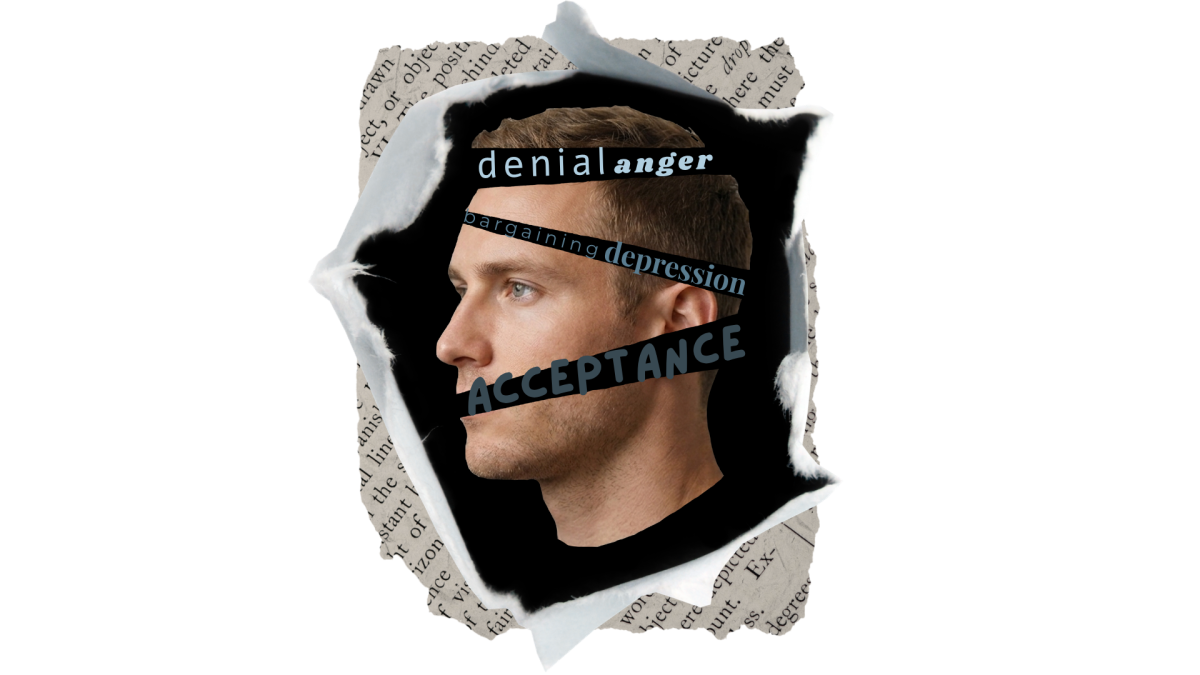
Lopez said, “That’s what is so hard about life, that we are human. We expect answers for everything. I don’t think everyone gets closure, and that is the hard part. It would be easier if we just knew everything and all the answers to all of it, but we don’t.”
I strongly believe closure does not exist in everyone’s situation. Even if someone believes they are experiencing closure, it may never actually surface in their life. We live, we grow and we move forward. Check on those in your circle and enjoy those moments while they last. All we can do is try to move forward; that is enough.